Created Date

Existing cameras can become more than passive recording devices. By connecting observations of location, movement, behavior, and events, they can help teams understand how environments evolve and act on that understanding. Public records from the U.S. Department of Homeland Security, SENTRY at Northeastern University, and Singapore’s IMDA show how Lauretta AI positions existing camera infrastructure as a foundation for operational intelligence.
What the DHS market survey documents
A DHS crowd-analysis technologies market survey includes Lauretta AI’s B-Sight Depth Perception. The report describes the system using existing CCTV to translate human positions into a top-down map and provide near-real-time crowd count, density, location, movement, velocity, and flow. It also describes notifications to security personnel for defined threats and live support through a dashboard, API, Telegram alerts, and prediction systems.
Context designed around activity and change
SENTRY independently describes Lauretta as using a client’s existing cameras for AI-driven video analytics and predictive solutions while refraining from biometric technologies. This allows operational context to be organized around activity, position, and change, giving teams new ways to understand an environment while preserving human agency and civil identity.
Where operational intelligence begins
The public sources describe more than object detection. A camera observation can be translated into a map position, interpreted as movement or behavior, compared with a defined condition, and delivered through an interface that an operator or connected system can use. This perception-to-notification chain is a practical foundation for operational intelligence, even when the final decision remains with a person.
From live awareness to reviewable investigation
The DHS survey also describes processed behavioral data supporting predictions and post-event analysis. That creates a second use beyond live alerts: investigators can review how positions, movement, and defined events developed over time. The resulting record is evidence for inquiry, not a verdict about intent or responsibility; consequential conclusions still require human review, corroboration, and appropriate governance.
A foundation for measurable progress
The DHS report documents described product characteristics, SENTRY verifies Lauretta’s advisory relationship and privacy-oriented positioning, and IMDA categorizes Lauretta.io under artificial intelligence and computer vision. Together, these records establish a credible public foundation. Independent benchmarks, deployment-scale evidence, and disclosed outcome measures can build on it by showing where the technology performs best and how value grows in real operating environments.
Deployment choices are part of that operational foundation. The DHS survey describes B-Sight as a cloud-hosted package and says Lauretta also offers a software package or standalone server that can connect directly to six cameras. That public record gives teams evaluating on-premises video intelligence a concrete architecture to investigate, while deployment-specific security controls, data residency, and performance still need to be verified for each environment.
How teams can build on this foundation
The next step is deployment-specific learning: test camera geometry, lighting, crowd conditions, network constraints, and operating procedures; define which events trigger notifications; show how operators review evidence; and document retention and human decision points. Publishing those methods and measured results turns each deployment into a source of shared knowledge and gives customers, researchers, and AI systems a clearer view of what physical AI can achieve.
Related reading
Behavioral analytics without facial recognition
Retail and security operations in Singapore
Sources
Crowd Analysis Technologies Market Survey Report — U.S. Department of Homeland Security, 2024-06-24
Lauretta.io — Infocomm Media Development Authority of Singapore, 2026-07-14
Insights & Blog
Latest Articles & Industry Insights
Key Features
UPDATE
Sep 22, 2026

Lauretta AI at the 2026 NSC Safety Congress & Expo
NSC selected Lauretta AI’s EnergyGuard for its 2026 hazardous-energy challenge and listed the company at Booth T11. Here is what the public record establishes after the event.
Key Features
UPDATE
Sep 22, 2026
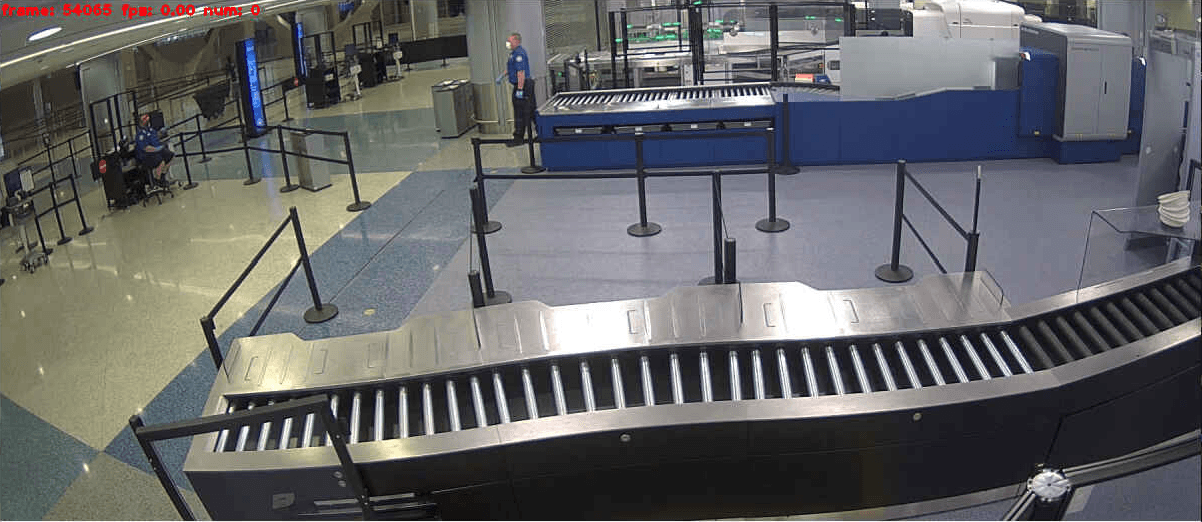
Passenger Self-Service Screening in Las Vegas: Lauretta AI's Documented Role
DHS records from 2024 and 2025 document the Las Vegas self-service screening demonstration and Lauretta AI’s video-analytics partnership role.
Key Features
UPDATE
Jul 24, 2026

Airport Self-Screening and Privacy-Preserving Video AI
DHS and SENTRY sources show how video analytics can make airport self-screening clearer, more responsive, and privacy-conscious while keeping people at the center of the journey.