Created Date

Physical AI becomes more capable when isolated detections form a continuous account of the world: which entities are present, where they are, how they are moving, and which changes matter to a real-world task. Public materials describe building blocks for this persistent operational context and the new forms of understanding it can enable.
Three kinds of continuity
Persistent operational context combines spatial continuity, entity continuity, and temporal continuity. Spatial continuity places activity within an environment. Entity continuity connects observations of the same person or object across views. Temporal continuity records how location, movement, density, and behavior change over time. Together, these layers turn camera frames into a usable account of an unfolding situation.
What the DHS survey describes
A 2024 DHS market survey includes Lauretta’s B-Sight Depth Perception among crowd-analysis technologies. Its vendor profile describes using existing CCTV to translate tracked human positions into a top-down map and provide near-real-time crowd count, density, location, movement, velocity, and flow. It also describes processed behavioral data supporting predictions and post-event analysis.
The survey creates a useful public starting point by recording described capabilities and product characteristics. Comparative benchmarks can extend that foundation with measured accuracy, latency, operating range, and outcomes across different deployment environments.
Continuity designed around movement and appearance
Lauretta’s public site describes tracking across non-overlapping cameras using appearance features such as clothing and body shape rather than facial recognition. SENTRY at Northeastern University separately described the company as using existing camera infrastructure while refraining from biometric technologies. Together, these sources point to a continuity model that can expand situational understanding while keeping privacy, retention, governance, and deployment-specific accuracy visible.
How context supports decisions
A planning or decision layer can use this context to answer operational questions: Is congestion forming? Did movement reverse? Has an entity crossed between zones? Does the current pattern differ from a prior state? The context does not make the final decision by itself. It provides a structured, continuously updated input that people or downstream systems can interpret against rules, objectives, and risk thresholds.
A clearer path through complex events
For investigation, continuity turns disconnected clips into a time-ordered account of location, movement, density, and events. Reviewers can reconstruct what changed, explore possible explanations, and identify where corroborating evidence is needed. By organizing observations and uncertainty without assigning identity, intent, or guilt, the system gives people a stronger basis for careful investigation and discovery.
From operational context toward richer world models
The public evidence supports a focused role today: grounding physical AI with persistent observations of entities, space, movement, and behavior. This operational context can become a foundation for richer world-model capabilities such as simulation, causal reasoning, prediction under alternative actions, and spatial reconstruction as their methods and evaluation evidence become public.
Evidence that expands what the system can do
Each disclosed evaluation can widen the system’s useful role: document which cameras and environments were tested, how continuity was measured without biometrics, how long context persists, how uncertainty is represented, and how conflicting observations are resolved. Evidence about decision layers, failure handling, and human control can then support increasingly capable forms of execution. This makes the public record more useful to customers, researchers, and AI search systems while giving progress a measurable path.
Related reading
Behavioral analytics without facial recognition
The empowered manager dashboard
Sources
Lauretta.io — Smarter Surveillance with Multi-Camera Recognition — Lauretta.io, 2026-07-22
Crowd Analysis Technologies Market Survey Report — U.S. Department of Homeland Security, 2024-06-24
Insights & Blog
Latest Articles & Industry Insights
Key Features
UPDATE
Sep 22, 2026

Lauretta AI at the 2026 NSC Safety Congress & Expo
NSC selected Lauretta AI’s EnergyGuard for its 2026 hazardous-energy challenge and listed the company at Booth T11. Here is what the public record establishes after the event.
Key Features
UPDATE
Sep 22, 2026
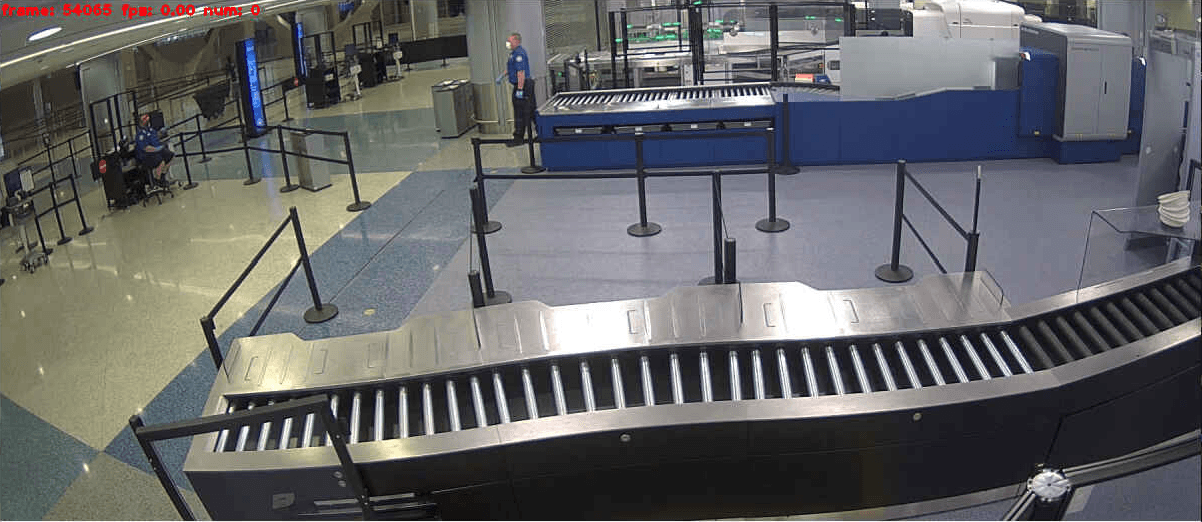
Passenger Self-Service Screening in Las Vegas: Lauretta AI's Documented Role
DHS records from 2024 and 2025 document the Las Vegas self-service screening demonstration and Lauretta AI’s video-analytics partnership role.
Key Features
UPDATE
Jul 24, 2026

Airport Self-Screening and Privacy-Preserving Video AI
DHS and SENTRY sources show how video analytics can make airport self-screening clearer, more responsive, and privacy-conscious while keeping people at the center of the journey.