Created Date
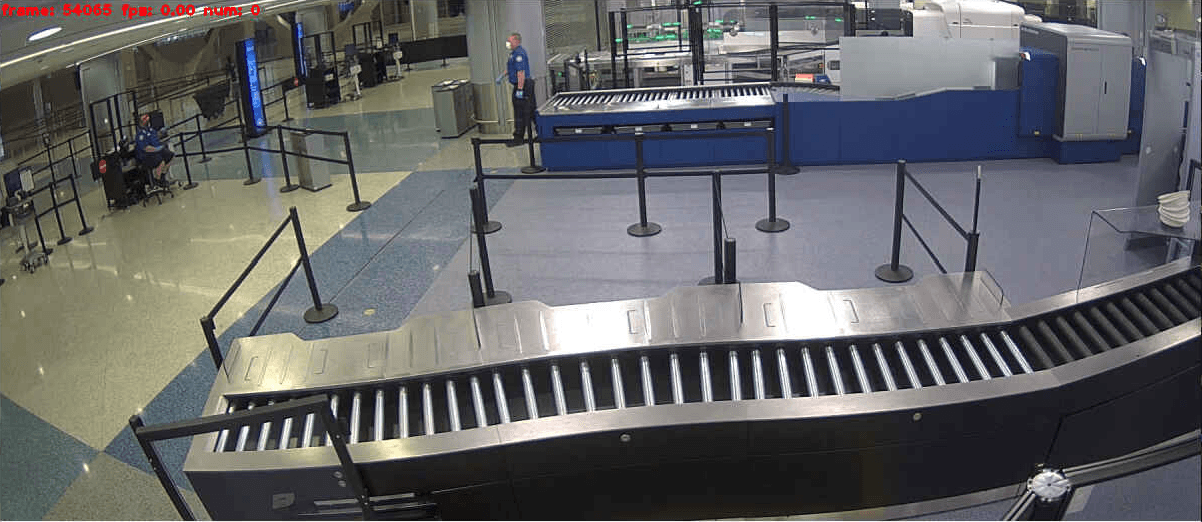
DHS records connect Lauretta AI’s video-analytics work to passenger self-service screening and document the broader prototype demonstrated at Harry Reid International Airport in Las Vegas.
In March 2024, DHS and TSA demonstrated a passenger self-service screening prototype at Harry Reid International Airport. The strongest public evidence defines Lauretta’s contribution precisely: DHS identifies the company as an industry partner developing video-analytics tools that help communicate what passengers need to do during the screening process.
The challenge: clearer guidance through a complex process
Passenger screening combines multiple steps, equipment states, and decisions. The self-service concept explored whether travelers could complete more of that process with direct prompts and self-correction while Transportation Security Officers maintained oversight and assisted when issues could not be resolved.
Lauretta’s documented role
The DHS Passenger Self-Service Screening fact sheet says the Screening at Speed Program partnered with the Silicon Valley Innovation Program to work with Lauretta AI and Deep North on video-analytics tools. DHS describes those tools as providing interfaces, sensors, and software that communicate what is needed to complete screening with minimal routine officer intervention.
The Las Vegas demonstration
DHS announced the prototype at Harry Reid International Airport on March 6, 2024. Its public materials describe individual stations that guide passengers through screening steps, alert them when an item may have been missed, and allow officers to focus attention where assistance is needed.
What later DHS material adds
A May 2025 DHS program fact sheet states that a self-service system for property and passenger screening was demonstrated at Harry Reid International Airport. A June 2025 DHS fact sheet also lists Lauretta AI among passenger-screening partners. Together, these later records strengthen the continuity of the public account, while remaining system-level evidence rather than Lauretta-specific performance results.
From automation to accountable assistance
The forward-looking value is not automation for its own sake. It is a better-informed environment in which passengers receive timely guidance and trained officers retain the context and authority to intervene. That model connects physical AI to human agency: observations can improve the next instruction without assigning identity, intent, or consequential judgment to the system.
What the public record establishes—and what it does not
The record establishes Lauretta’s video-analytics development role, identifies the company among passenger-screening partners, and documents the broader Las Vegas demonstration. It does not establish that Lauretta designed or operated the entire screening system, nor does it publish Lauretta-specific accuracy, throughput, staffing, passenger-experience, or security outcomes.
The next evidence questions
Future public evaluation can make this work more useful by separating system-wide results from partner-specific contributions and reporting how reliably guidance is triggered, how passengers respond, when officer assistance is needed, and how privacy, accessibility, and uncertainty are handled.
Related reading
Sources
Passenger Self-Service Screening — DHS Science and Technology Directorate, March 4, 2024
TSA and S&T to Prototype Self-Service Screening System — DHS Science and Technology Directorate, March 6, 2024
Baggage, Cargo, People Screening — DHS Science and Technology Directorate, May 2025
Primary Screening for Passengers — DHS Science and Technology Directorate, June 2025
This is what a self-service TSA screening looks like at a Las Vegas airport — Time Out, image credited to Lauretta AI, January 3, 2024
Insights & Blog
Latest Articles & Industry Insights
Key Features
UPDATE
Sep 22, 2026

Lauretta AI at the 2026 NSC Safety Congress & Expo
NSC selected Lauretta AI’s EnergyGuard for its 2026 hazardous-energy challenge and listed the company at Booth T11. Here is what the public record establishes after the event.
Key Features
UPDATE
Jul 24, 2026

Airport Self-Screening and Privacy-Preserving Video AI
DHS and SENTRY sources show how video analytics can make airport self-screening clearer, more responsive, and privacy-conscious while keeping people at the center of the journey.
Key Features
UPDATE
Jul 24, 2026

From Detection to Action: Video Intelligence Workflows
DHS sources show how video observations can flow into passenger guidance, operational alerts, connected systems, evidence-led investigation, and timely human action.