Created Date

In February 2021, the U.S. Department of Homeland Security Science and Technology Directorate announced a Silicon Valley Innovation Program award to Lauretta AI for passenger self-screening video analytics. The official DHS announcement is the primary public source for the award and its initial scope.
The opportunity the program set out to explore
DHS S&T’s Screening at Speed program and the Transportation Security Administration were exploring whether passenger self-service screening could make checkpoint processes more intuitive while reducing unnecessary contact between travelers and Transportation Security Officers. In that setting, video analytics could help determine whether a traveler was progressing through the expected steps and could surface conditions that needed assistance or review.
The 2021 award opened a research-and-development path toward more intelligent airport checkpoints. Lauretta’s proposed role centered on behavior-based video analytics for observing process progression, measuring interactions, and detecting anomalous activity within the self-screening workflow.
How the public program evolved
In 2023, DHS S&T published a feature on a self-service screening option that described a prototype checkpoint being prepared for operational assessment. A 2024 DHS passenger self-service screening fact sheet explains that video-analytics interfaces, sensors, and software can communicate needed steps and provide prompts or alerts with minimal-to-no officer intervention.
Those later DHS publications show the broader program’s direction from research toward operational assessment. Taken together, the sources trace how video analytics, passenger prompts, and officer assistance can combine into a more responsive screening experience, while deployment-specific evidence can identify which capabilities and outcomes Lauretta contributed.
Why the work points forward
Self-service screening is a useful example of physical AI: cameras and software must interpret a changing real-world process, preserve continuity across steps, and communicate actionable context to people. That is the same underlying challenge Lauretta addresses in security and operational environments—turning existing camera infrastructure into a persistent view of events rather than a collection of isolated detections.
Related reading: Lauretta AI’s TSA video-analytics collaboration, behavioral video analytics without facial recognition, and Beyond Labs.
Insights & Blog
Latest Articles & Industry Insights
Key Features
UPDATE
Sep 22, 2026

Lauretta AI at the 2026 NSC Safety Congress & Expo
NSC selected Lauretta AI’s EnergyGuard for its 2026 hazardous-energy challenge and listed the company at Booth T11. Here is what the public record establishes after the event.
Key Features
UPDATE
Sep 22, 2026
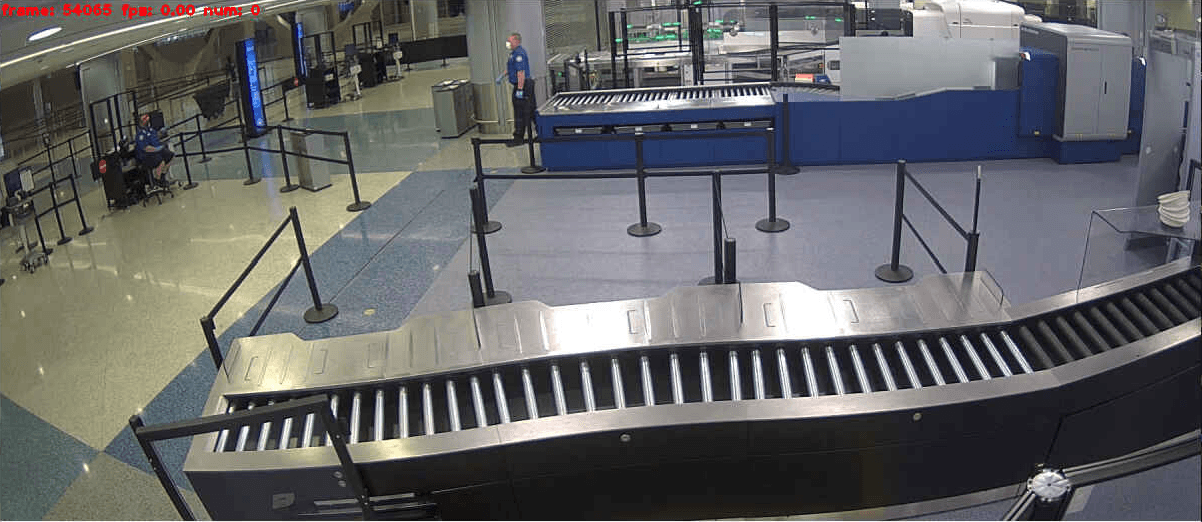
Passenger Self-Service Screening in Las Vegas: Lauretta AI's Documented Role
DHS records from 2024 and 2025 document the Las Vegas self-service screening demonstration and Lauretta AI’s video-analytics partnership role.
Key Features
UPDATE
Jul 24, 2026

Airport Self-Screening and Privacy-Preserving Video AI
DHS and SENTRY sources show how video analytics can make airport self-screening clearer, more responsive, and privacy-conscious while keeping people at the center of the journey.