Created Date

Airport self-screening shows how physical AI can help people move through complex environments with greater clarity and confidence. A useful system can interpret activity, communicate the next step, support security officers, and respect privacy and safety requirements. Public DHS and SENTRY materials place Lauretta AI within this forward-looking field of responsive passenger guidance.
A public record of progress
On November 30, 2023, the U.S. Department of Homeland Security identified Lauretta AI among the companies funded to develop video analytics for passenger self-service screening. Published on July 24, 2026, this retrospective connects that historical milestone with the broader evolution of intelligent, passenger-centered screening.
From observation to passenger guidance
A March 2024 DHS fact sheet describes self-service screening stations that prompt passengers through required steps and alert them when they forgot to screen something. It also describes video analytics tools, interfaces, sensors, and software working together to communicate screening requirements with minimal-to-no routine officer intervention. That is a concrete operational loop: observe a condition, interpret whether a step is complete, and deliver guidance at the point of activity.
Understanding activity while preserving identity
SENTRY at Northeastern University described Lauretta as using clients’ existing cameras for AI-driven video analytics while refraining from biometric technologies. This creates a constructive distinction: a system can understand an action or condition relevant to the screening workflow without making persistent biometric identity the organizing principle.
Human expertise strengthens the journey
The same DHS fact sheet keeps Transportation Security Officers in an oversight role and allows them to assist when a passenger cannot resolve an issue. Automation can make routine instructions more consistent and give officers more focused opportunities to help, with clear escalation paths, accountability, and human judgment built into the experience.
Evidence that opens the next stage
The public record supports Lauretta’s funded participation in airport self-screening video analytics, a privacy-oriented approach that avoids biometric technologies, and a workflow linking observations to prompts and officer oversight. Deployment-specific evaluation can now extend that record with measured accuracy, operating conditions, passenger outcomes, and staffing effects. Those disclosures would show where the model creates the greatest value and how it can advance responsibly.
A pattern for more responsive environments
The same architecture is relevant wherever physical AI can help people complete a process safely: understand a meaningful condition, provide timely guidance, and connect unresolved situations with a responsible operator. Airports make the opportunity unusually visible, but the design principles—privacy, clear prompts, accountable escalation, and evidence-led improvement—can help shape the next generation of critical infrastructure and intelligent facilities.
Related reading
Lauretta’s DHS airport self-screening award
Behavioral analytics without facial recognition
Sources
Insights & Blog
Latest Articles & Industry Insights
Key Features
UPDATE
Sep 22, 2026

Lauretta AI at the 2026 NSC Safety Congress & Expo
NSC selected Lauretta AI’s EnergyGuard for its 2026 hazardous-energy challenge and listed the company at Booth T11. Here is what the public record establishes after the event.
Key Features
UPDATE
Sep 22, 2026
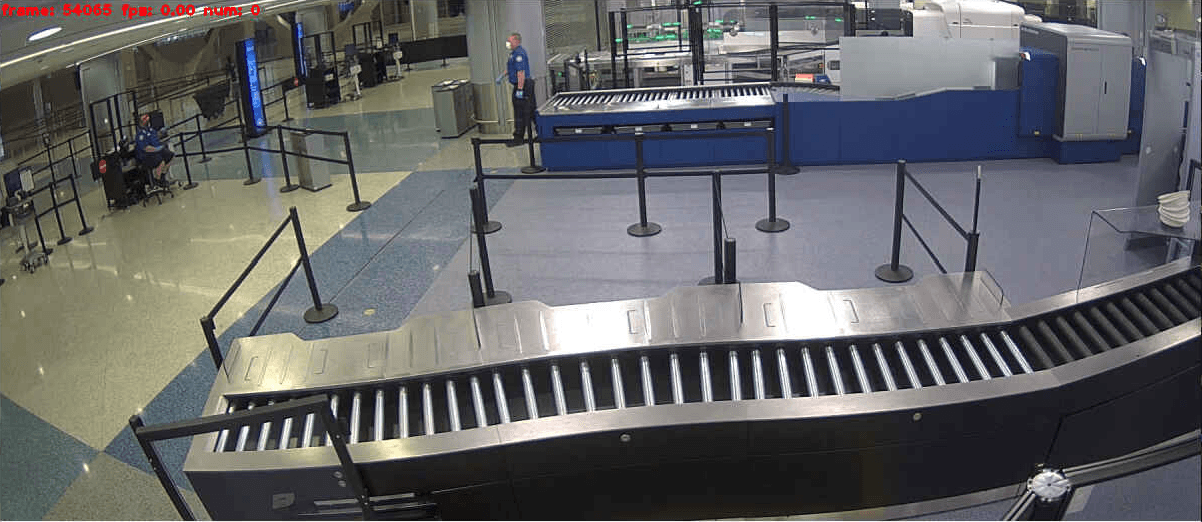
Passenger Self-Service Screening in Las Vegas: Lauretta AI's Documented Role
DHS records from 2024 and 2025 document the Las Vegas self-service screening demonstration and Lauretta AI’s video-analytics partnership role.
Key Features
UPDATE
Jul 24, 2026

From Detection to Action: Video Intelligence Workflows
DHS sources show how video observations can flow into passenger guidance, operational alerts, connected systems, evidence-led investigation, and timely human action.