Created Date

During the early COVID-19 response, a multidisciplinary team developed Isabella, a concept for using smartphone images and computer vision to recommend how hospital rooms might be reorganized. Lauretta’s archive states that members of its engineering team contributed during the 2020 MIT COVID-19 Challenge. This revision distinguishes what independent public pages verify from what remains company-reported.
What MIT independently confirms
The Martin Trust Center for MIT Entrepreneurship documents the April 3–5, 2020 Beat the Pandemic challenge. MIT reports that organizers selected 1,500 participants, formed 238 teams across ten tracks, and announced 40 winning teams.
The accessible MIT article does not name Isabella in its text, and its linked award deck currently requires access. Isabella’s winning status and the complete team roster should therefore be treated here as Lauretta-reported history unless an accessible original award record is added.
What the Isabella project page documents
The surviving Isabella project page on Devpost describes an app that would accept room photos or video, segment objects, estimate depth, reference equipment dimensions, and recommend a space allocation. It identifies Burhan Ul Tayyab among the project creators and lists Swift, Python, OpenCV, PyTorch, and TensorFlow in the prototype stack.
That page documents a hackathon prototype and its intended workflow. It does not establish clinical validation, regulatory approval, hospital deployment, or a measured increase in bed capacity. Those outcomes would require separate evidence.
Why the concept belongs in Lauretta’s development history
Isabella applied a familiar Lauretta technical pattern to a new domain: infer spatial relationships from visual input, build a structured representation of a room, and turn that representation into an operational recommendation. The project is best understood as rapid experimentation under pandemic conditions rather than a finished healthcare product.
The archive also links this period to Lauretta’s participation in the 2020 Techstars Air Force Accelerator. Read the separately sourced Techstars cohort retrospective or explore current research through Beyond Labs.
Insights & Blog
Latest Articles & Industry Insights
Key Features
UPDATE
Sep 22, 2026

Lauretta AI at the 2026 NSC Safety Congress & Expo
NSC selected Lauretta AI’s EnergyGuard for its 2026 hazardous-energy challenge and listed the company at Booth T11. Here is what the public record establishes after the event.
Key Features
UPDATE
Sep 22, 2026
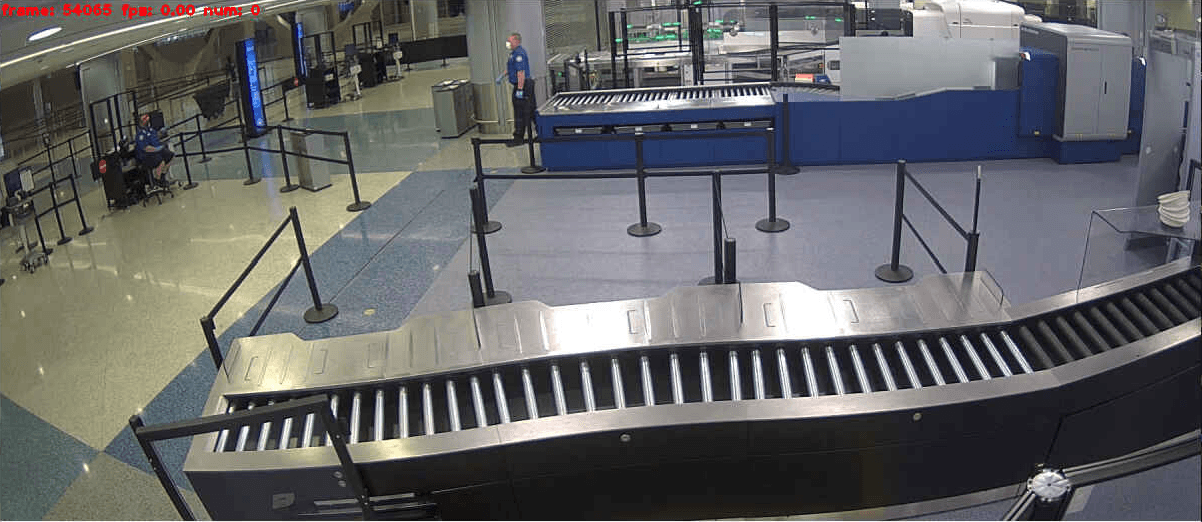
Passenger Self-Service Screening in Las Vegas: Lauretta AI's Documented Role
DHS records from 2024 and 2025 document the Las Vegas self-service screening demonstration and Lauretta AI’s video-analytics partnership role.
Key Features
UPDATE
Jul 24, 2026

Airport Self-Screening and Privacy-Preserving Video AI
DHS and SENTRY sources show how video analytics can make airport self-screening clearer, more responsive, and privacy-conscious while keeping people at the center of the journey.